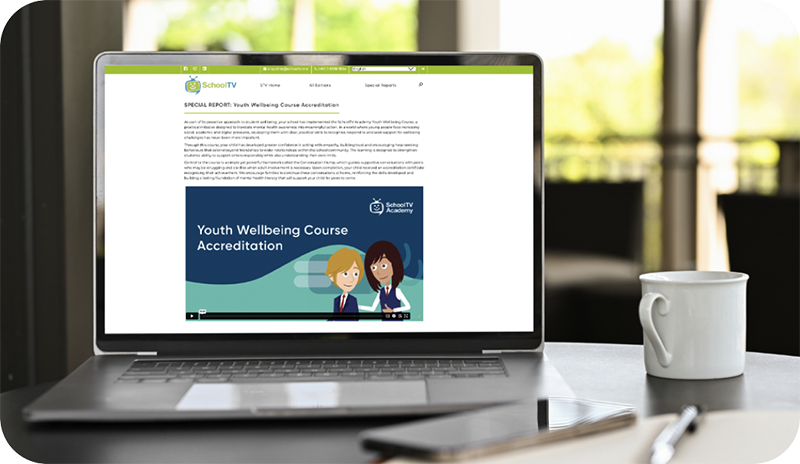
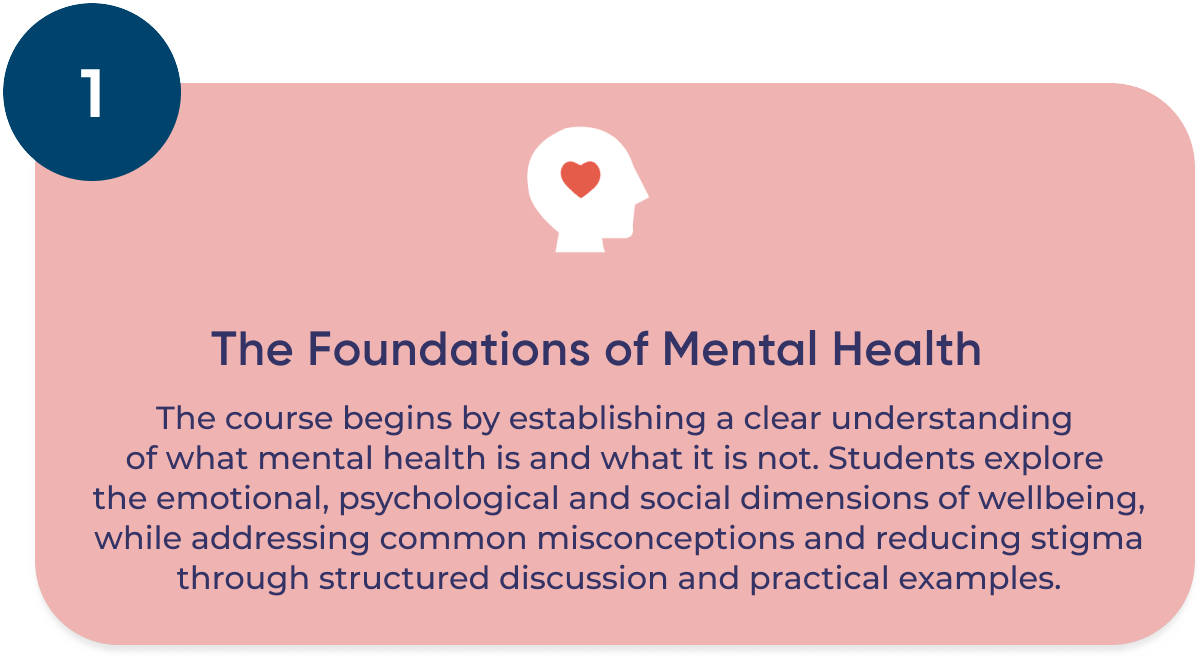
The Youth Wellbeing Course provides students with a structured foundation in mental health literacy and practical peer-support skills. Delivered across 4 modules using short, engaging videos, interactive activities and guided discussion, it moves students from understanding key concepts to confidently applying them in real-life situations.
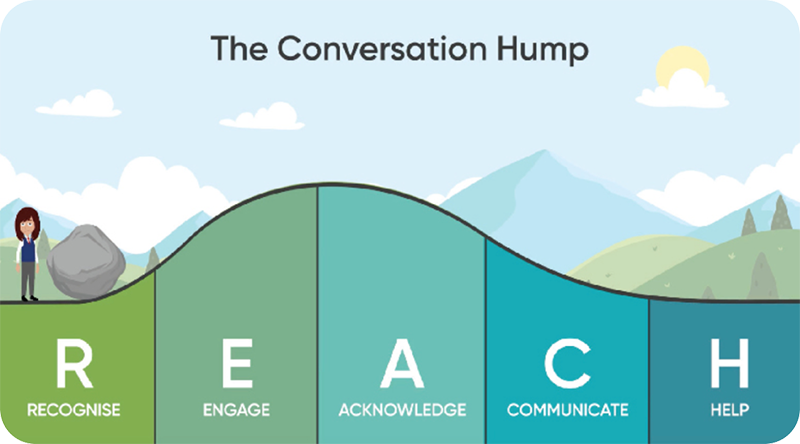
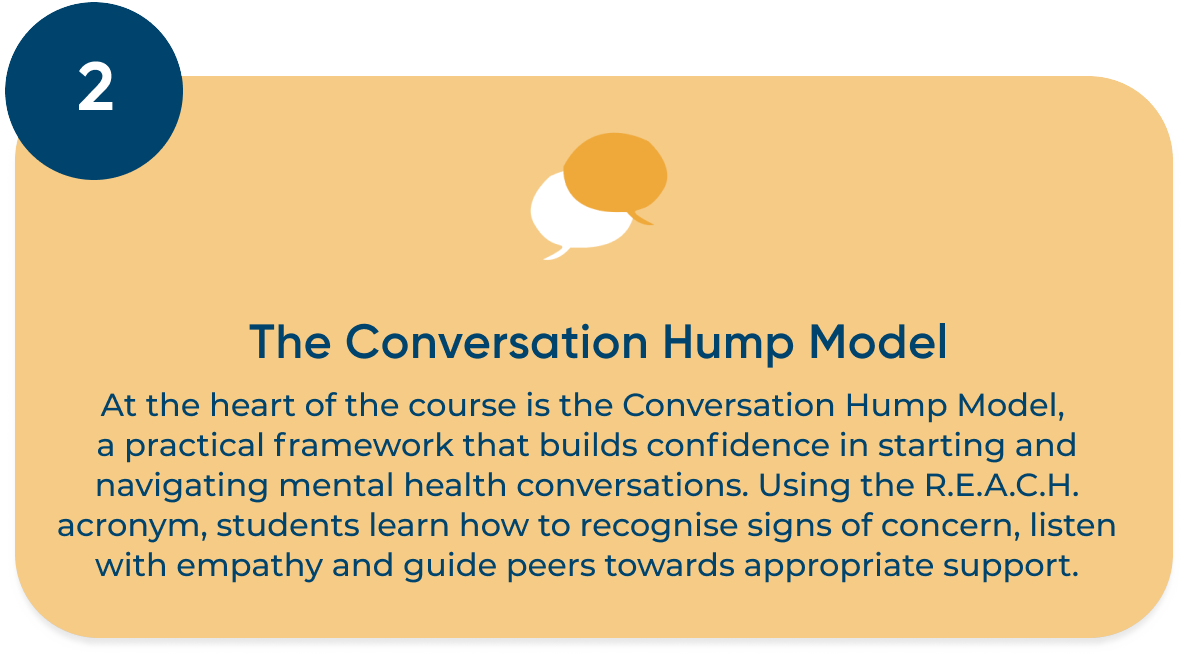
Students are introduced to the R.E.A.C.H. conversation model, a clear framework that helps them recognise when a peer may be struggling, initiate supportive conversations and know when to involve a trusted adult. Through role-play and practical scenarios, they build communication skills and complete an online accreditation that reinforces learning and recognises their achievement.
Who is it for?
The course is designed specifically for Year 8 students, with content that can be readily adapted for Years 7 and 9. It recognises early adolescence as a pivotal stage for developing mental health literacy, social awareness and positive help-seeking behaviours. By introducing structured, practical skills at this point in development, the course supports schools adopting a preventative approach that equips young people to support themselves and their peers, while fostering a culture of early intervention and shared responsibility.
It complements, but does not replace, professional mental health care or school-based clinical support.
Learning Modules
Outcomes
The Youth Wellbeing Course equips students with practical life skills that extend well beyond the classroom. Students complete the modules with stronger mental health literacy, increased confidence in supporting peers, and a clear understanding of when and how to seek help from trusted adults.
Through structured learning and applied practice, students develop communication skills grounded in empathy, active listening and responsible action.

Course Delivery
The course is designed to be teacher-led, with all content delivered without the need for external training or facilitator accreditation. Teachers access course content via an easy-to-use digital platform, guiding their class through engaging short videos and interactive quizzes.
A comprehensive teaching guide supports delivery, providing step-by-step instructions for each module, along with optional discussion prompts and curriculum-aligned extension activities.
Designed with flexibility in mind, the course can be delivered across diverse school settings over a full term using the extension activities, or adapted into a shorter format. Each module fits within a standard lesson block, allowing schools to seamlessly integrate the program into existing schedules and tailor it to their cohort.
 As a full-class program
 With small groups eg: (e.g. leadership or peer support teams)
Curriculum mapping
The Youth Wellbeing Course aligns with the Australian Curriculum (ACARA), specifically within the Health and Physical Education learning area for Years 7–8. It supports key curriculum outcomes through practical, skills-based learning, strengthening student wellbeing and mental health literacy while integrating seamlessly into existing school frameworks.
Accreditation
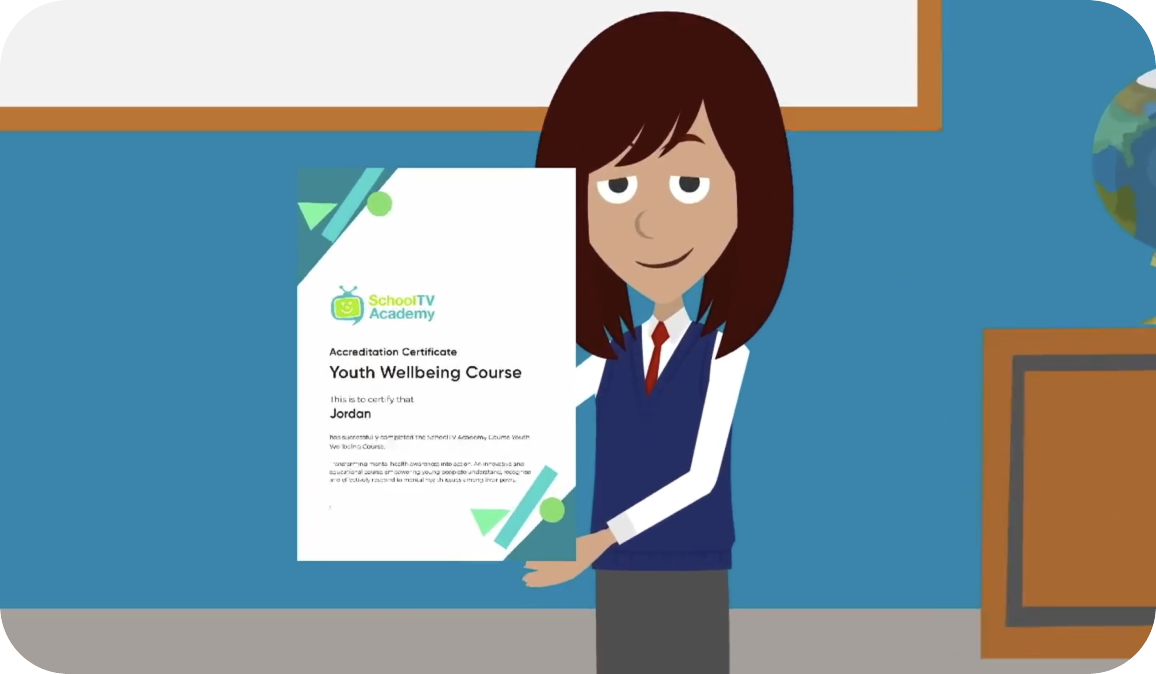
Students receive a Certificate in Youth Wellbeing upon successful completion of the final module.
This certificate:
- Recognises understanding of empathy and peer support
- Strengthens applications for roles such as babysitting or coaching
- Reflects strong mental health literacy and communication skills
Teachers delivering the course also receive a Certificate of Facilitation from SchoolTV Academy in recognition of their role.
Informing families to build connection
Upon completion of the Youth Wellbeing Course, schools are provided with a professionally developed video communication to share with families.
This provides a clear and engaging overview of what students have participated in, the key skills they have learned, and the practical strategies they can apply in everyday situations. It ensures families are informed, included and equipped to reinforce these learnings at home, strengthening the school–family partnership and extending the impact of the course beyond the classroom.